Your Results

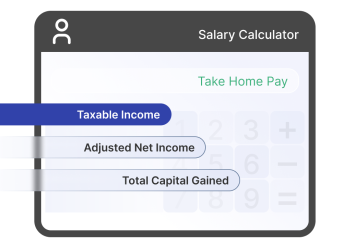
Adjusted net income

Adjusted net income is your total taxable income before personal allowances, less qualifying pension contributions. Your personal allowance is reduced by £1 for every £2 that adjusted net income is above £100,000. Your allowance is zero if adjusted net income is £125,140 or above. If adjusted net income exceeds £150,000, you will likely need to submit a Self-Assessment tax return.

Take Home

Take home is the amount you receive into your personal bank account after deducting all taxes, accrued holiday pay and student loan contributions.

Total Capital

Total capital consists of your take home pay, plus any pension contributions and accrued holiday pay. It is designed to give a more accurate representation of the overall financial gain from a contract and can be compared against the same figure in our Outside IR35 Calculator.

Annualised Earnings

An annualised calculation estimates how much you will earn for a full year based on a defined working time variable: hours, days or weeks. As a frame of reference, a standard year has 260 working days, with most contractors aiming to work between 230 and 250 days.

Specific Dates

If you know a contract's start and end date, you can enter it here to calculate how much you will earn over a specific period. Bank holidays are automatically excluded from the number of working days. The specific dates functionality only works if the timing input is set to ‘Per Day’.

Tax Year

By default, the current tax year is applied, but if you wish to see calculations for other years, you can select them from the drop-down menu. Where tax rates change during the year, a blended rate is applied.

Tax Code

1257L is the standard tax code used by most people. If you are unsure of your tax code but think you will earn over £100k, leave the settings on Standard. The tapered personal allowance will be considered automatically.

Scotland

If you live in Scotland, you pay a different rate of income tax. You'll pay the same rate as the rest of the UK on dividends.

Non-Standard Tax Code

HMRC may provide a non-standard tax code if your situation calls for it. The letter refers to your specific situation and is used to adjust your personal allowance. Most codes also contain a number, which usually refers to the amount you can earn before any tax is due, divided by 10.

National Insurance

The NI category letter determines what contributions employers and employees need to make when running payroll. Most individuals have a NI category letter of A.

Other Income

Other income accounts for any other income received during the year that would usually be included on a Self-Assessment tax return. For income, this may be from a second job, property investment or a side hustle. Dividends would usually come from any qualifying investments held.

Other Dividends

Other dividends accounts for any other dividends received during the year that would usually be included on a Self-Assessment tax return. This would usually come from any qualifying investments held.

Student loan

Student loans are repaid using different methods depending on when you started the course for which you took the loan and where you lived.

Salary Sacrifice

Some umbrella companies facilitate salary sacrifice arrangements, where a contractor agrees to reduce their pay, with the difference paid into their SIPP. The reduction in pay means lower income tax and National Insurance (both Employer's and Employee's contributions).

These tax breaks make salary sacrifice the most popular choice for contractors who want to save for their future in a tax-efficient way.

Salary Sacrifice

As a contractor, you can make pension contributions from your personal funds or your company’s pre-tax income. Most limited company contractors will make their pension contributions through their company as it is more tax-efficient than contributing your funds as an individual. Pension contributions made directly from your company’s income are invested before tax, which means you will save the amount you would have paid in both income and corporation tax on the contribution

Unlike personal pension contributions, the amount that can be invested directly from your company income is not linked to the amount you take as a salary.

Salary Sacrifice

A salary sacrifice arrangement is where an employee agrees to reduce their pay, with the difference paid into their SIPP. The reduction in pay means lower income tax and national insurance.

Workplace Pension

Umbrella company contractors are automatically enrolled in a workplace pension scheme. Unlike permanent employees, umbrella workers are responsible for the employee's contribution (minimum 5%) and the employer's contribution (minimum 3%). Once enrolled, you're entitled to opt out or cease active membership.

Workplace Pension

Employees are automatically enrolled in a workplace pension scheme. Once enrolled, you're entitled to opt out or cease active membership.

Allowances

The Blind Person's Allowance is an extra tax-free allowance, meaning you can earn more before paying Income Tax.

The Marriage Allowance lets you receive a fixed amount of your spouse/civil partner's Personal Allowance, thereby reducing your tax bill.

Blind Person's Allowance

The Blind Person's Allowance is an extra tax-free allowance, meaning you can earn more before paying Income Tax.

Marriage Allowance

The Marriage Allowance lets you receive a fixed amount of your spouse/civil partner's Personal Allowance, thereby reducing your tax bill.

Cash Allowances

Cash allowances are extra payments an employer gives you on top of your base salary to cover specific costs or compensate for particular circumstances. They are usually paid as cash, rather than as a benefit or reimbursement, which means you can spend them however you choose. They are treated like normal pay for tax purposes (taxable and subject to National Insurance, unless specifically exempt).

Umbrella Margin

The umbrella company margin is the amount the umbrella company charges on each payment you receive. It's an administration fee, covering the cost of running your payroll and the other operational costs of running a business.

Holiday Pay

There are two main methods by which you can receive your holiday pay as an umbrella company contractor:

  • Advanced Payment: The umbrella company adds your holiday pay to your regular payslip. This option is the most preferred solution among umbrella company contractors
  • Accrual Method: The umbrella company sets aside your holiday pay until you decide to take annual leave or when you leave the company.

Apprenticeship Levy

The UK Government initiated the Apprenticeship Levy in April 2017 for all employers paying a wage bill of more than £3 million per year. Umbrella Companies that meet this criterion are required to pay 0.5% of their payroll each month as a levy tax, a charge they pass onto contractors

Director’s Salary

You have three options:

1. Simplified

At £9,100, your salary is at the Secondary Threshold and below the Primary Threshold, so there is no employer’s or employee’s National Insurance (‘NI’) due. It is higher than the Lower Earnings Limit, so you will continue to earn NI credits. Although £9,100 is more straightforward regarding administration, you are roughly £180 worse off than the salary of £12,570 due to less of an offset against your corporation tax bill. This option is usually only chosen by contractors without an accountant, wanting to avoid the burden of making NI payments.

2. Tax Efficient

Most contractors choose £12,570, as this is the most tax-efficient option whereby you maximise your personal allowance. Although you must make NI contributions, this is offset by the additional corporation tax savings. £12,570 is the best salary for a company with multiple employees as your company becomes eligible for the employment allowance.

3. Other

The optimum salaries mentioned above are only advisable if the director has their total personal allowance. When the director has other income (such as a second job or from rental properties), it may be advisable to pay a different salary.

Employment Allowance

Employment allowance allows eligible employers to reduce their Employer’s National Insurance liability by up to £5,000. There are multiple criteria for eligibility, although the relevant one here is that a company is not eligible for the employment allowance if there is only one employee in the company and that employee is also a director.

What this means in practice is that if you are a limited company contractor and you employ your spouse, you can both take salaries of £12,570 and use the employment allowance to reduce the Employer’s National Insurance liability to zero.

Other Salary Taken

The optimum salaries mentioned above are only advisable if the director has their total personal allowance. When the director has other income (such as a second job or from rental properties), it may be advisable to pay a different salary.

Second Employee

It is common for contractors to employ a spouse (or other family members) in their business as a second employee. It not only provides the opportunity to maximise tax efficiencies by paying them a salary and utilising their income thresholds, but also helps ease the administrative burden of running a Limited Company.

Retained Earnings

Owners of limited companies can plan a tax-efficient distribution of dividends by leaving surplus profit in the business and withdrawing it in a later tax year. The profit left within the company is known as ‘retained earnings’. Although corporation tax is still owed, no dividend tax is due until the money is paid to shareholders.

Business Asset Disposal Relief

Business Asset Disposal Relief (‘BADR’) is a form of tax relief that reduces the rate of capital gains tax paid to 10%, and most contractors can claim the relief when they decide to close their personal limited company. Retained earnings are a qualifying asset, meaning they are eligible for the reduced tax rate.

Joint Ownership

Joint Ownership Dividends are distributed according to the percentage of company shares owned by each shareholder, i.e. if a contractor and their partner each own half the company’s shares, they will each receive 50% of every dividend distribution.

Recurring Expenses

Limited company expenses are allowable expenses that your business can claim, they are subtracted from your revenue, reducing the amount of corporation tax you pay. You can only claim for the expenses you incur 'wholly and exclusively' during the everyday running of your business. Recurring expenses may include accountancy fees, insurance, phone bills, professional subscriptions etc.

One-Off Expenses

One off expenses include items such as computer equipment, training courses, eligible travel costs etc.

Bonus

Your bonus is paid in addition to regular pay.

Overtime

Overtime refers to any hours worked that exceed your normally scheduled working hours.

Taxable Benefits

A taxable benefits (or ‘benefit in kind’) is any non-cash benefit of monetary value provided by a company to an employee that isn’t ‘wholly and exclusively’ for the purposes of the business. They are often called 'perks', 'fringe benefits' or 'notional pay'.

Companies use benefits in kind to reward employees over and above paying their wages and bonuses. The rewards have a monetary value attached, so they are treated as taxable income.

Employment Costs

Employment costs are the statutory expenses that an umbrella company must pay because it is acting as your employer. They are not deductions from your personal pay; instead, they are part of the employer's cost of hiring you.

Breakdown
  • Umbrella Margin
  • Employer's NI
  • Apprenticeship Levy
  • Employer's Workplace Pension

Adjusted Net Income

Adjusted Net Income is your total taxable income before any Personal Allowances, less any qualifying pension contributions. Key points of note:

  • Your personal allowance is reduced by £1 for every £2 that your net income is above £100,000, and your allowance is zero if your net income is £125,140 or above.
  • If your net income exceeds £100,000, you are no longer eligible for Tax-Free Childcare. Eligibility ends as soon as either partner crosses the threshold.
  • If your net income exceeds £100,000, you will likely need to submit a Self-Assessment tax return.

Taxes

Breakdown
  • Income Tax
  • Dividend Tax
  • National Insurance

Other Deductions

Breakdown
  • Pension Contributions
  • Student Loan

Other Additions

Breakdown
  • Pension Contributions
  • Accrued Holiday Pay

Total Capital

Total capital consists of your take home pay, plus any pension contributions and accrued holiday pay. It is designed to give a more accurate representation of the overall financial gain from a contract and can be compared against the same figure in our Outside IR35 Calculator.

Details

Take Home
Salary ---
Bonus ---
Overtime ---
Cash Allowances ---
Gross Pay ---
Taxable Benefits ---
Other Income ---
Salary Sacrifice ---
Employee’s Workplace Pension ---
Adjusted Net Income

Adjusted Net Income is your total taxable income before any Personal Allowances, less any qualifying pension contributions. Key points of note:

  • Your personal allowance is reduced by £1 for every £2 that your net income is above £100,000, and your allowance is zero if your income is £125,140 or above.
  • If you or your partner have adjusted net income above £100,000, you are no longer eligible for Tax-Free Childcare. Eligibility ends as soon as either partner crosses the threshold.
  • If your net income exceeds £150,000, you will likely need to submit a Self-Assessment tax return.
---
Income Tax ---
Dividend Tax ---
National Insurance ---
Student Loan ---
Take Home ---
Taxes Income Rate Tax
Personal Allowance --- 0% ---
Basic Rate --- 20% ---
Higher Rate --- 40% ---
Additional Rate --- 45% ---
Income Tax --- ---
Dividend Allowance --- 0% ---
Personal Allowance --- 0% ---
Basic Rate --- 10.75% ---
Higher Rate --- 35.75% ---
Additional Rate --- 39.35% ---
Dividend Tax --- ---
Total Income Tax --- ---
< Primary Threshold --- 0% ---
> Primary Threshold --- 8% ---
> Upper Earnings --- 2% ---
Total National Insurance National Insurance ---
Total Tax --- ---

PAYE Salary Calculator Contract vs Permanent

Compare contract day rates with permanent PAYE salaries, including tax and National Insurance for 2026/2027.

  • Salary & Bonus
  • Workplace Pensions
  • Salary Sacrifice
  • Take Home & Tax
Salary Calculator

Inputs

£

Choose tax year

2026/2027

My tax code is

I pay tax in Scotland

Your tax code is: 1257L

My National Insurance letter is

Overtime 1

£

Overtime 2

£

Other income received

£

Other dividends received

£

Blind person's allowance

Marriage allowance

Cash allowance

£

Student Loan

Taxable benefits

£

Outputs

Broken down by:

Take Home
Salary ---
Other Additions
Breakdown
  • Bonus: ---
  • Overtime: ---
  • Cash Allowances: ---
---
Gross Pay ---
Other Income
Breakdown
  • Other Income: ---
  • Other Dividends: ---
  • Taxable Benefits: ---
---
Pension Contributions ---
Adjusted Net Income

Adjusted Net Income is your total taxable income before any Personal Allowances, less any qualifying pension contributions. Key points of note:

  • Your personal allowance is reduced by £1 for every £2 that your net income is above £100,000, and your allowance is zero if your income is £125,140 or above.
  • If you or your partner have adjusted net income above £100,000, you are no longer eligible for Tax-Free Childcare. Eligibility ends as soon as either partner crosses the threshold.
  • If your net income exceeds £150,000, you will likely need to submit a Self-Assessment tax return.
---
Taxes
Breakdown
  • Income Tax: ---
  • Dividend Tax: ---
  • National Insurance: ---
---
Student Loan ---
Take Home ---
INCOME RATE TAX

Totals —                     —

Contract to Permanent Salary Comparison

Contract day rates look higher than permanent salaries because they must cover employer NI, apprenticeship levy, umbrella margin or agency costs, unpaid bench time, and holiday between contracts. A permanent package includes paid leave, pension, and benefits that a headline day rate may omit.

Use this tool to translate a contract rate into an equivalent PAYE annual figure, then compare with a permanent offer including pension and holiday value.

Understanding Agency PAYE and Deductions

Agency PAYE treats you as an employee of the agency: Income Tax and employee National Insurance are deducted at source, similar to permanent payroll. You do not run a limited company or umbrella in this model, but the agency still bears employer NI and levy on your assignment.

For contractor-specific scenarios, compare this PAYE baseline with our inside IR35 umbrella tool to see how umbrella costs change the split between assignment rate and take-home.

Holiday Pay and Statutory Benefits

PAYE employees accrue statutory holiday (5.6 weeks for full-time workers in the UK). Agency contractors may see holiday rolled into pay or shown separately depending on the agency’s policy.

Where the Agency Workers Regulations (AWR) apply after twelve weeks in the same role, pay and working conditions may need to match comparable permanent staff—factor that into perm vs contract comparisons, not just headline rate.

PAYE Salary Calculator Contract vs Permanent

Compare contract day rates with permanent PAYE salaries, including tax and National Insurance for 2026/2027.

  • Salary & Bonus
  • Workplace Pensions
  • Salary Sacrifice
  • Take Home & Tax

Inputs

£

Outputs

Broken down by:

Take Home
Salary ---
Other Additions
Breakdown
  • Bonus: ---
  • Overtime: ---
  • Cash Allowances: ---
---
Gross Pay ---
Other Income
Breakdown
  • Other Income: ---
  • Other Dividends: ---
  • Taxable Benefits: ---
---
Pension Contributions ---
Adjusted Net Income

Adjusted Net Income is your total taxable income before any Personal Allowances, less any qualifying pension contributions. Key points of note:

  • Your personal allowance is reduced by £1 for every £2 that your net income is above £100,000, and your allowance is zero if your income is £125,140 or above.
  • If you or your partner have adjusted net income above £100,000, you are no longer eligible for Tax-Free Childcare. Eligibility ends as soon as either partner crosses the threshold.
  • If your net income exceeds £150,000, you will likely need to submit a Self-Assessment tax return.
---
Taxes
Breakdown
  • Income Tax: ---
  • Dividend Tax: ---
  • National Insurance: ---
---
Student Loan ---
Take Home ---
INCOME RATE TAX

Totals —                     —

Calculator Inputs Timing

£

Timing

Tax Year

Choose tax year

2026/2027

Tax Code

My tax code is

I pay tax in Scotland

Your tax code is: 1257L

My National Insurance letter is

Other

Other income received

£

Other dividends received

£

Blind person's allowance

Marriage allowance

Cash allowance

£

Student Loan

Pension

Bonus

Overtime

Overtime 1

£

Overtime 2

£

Benefits

Taxable benefits

£

Calculator Inputs

Contract to Permanent Salary Comparison

Contract day rates look higher than permanent salaries because they must cover employer NI, apprenticeship levy, umbrella margin or agency costs, unpaid bench time, and holiday between contracts. A permanent package includes paid leave, pension, and benefits that a headline day rate may omit.

Use this tool to translate a contract rate into an equivalent PAYE annual figure, then compare with a permanent offer including pension and holiday value.

Understanding Agency PAYE and Deductions

Agency PAYE treats you as an employee of the agency: Income Tax and employee National Insurance are deducted at source, similar to permanent payroll. You do not run a limited company or umbrella in this model, but the agency still bears employer NI and levy on your assignment.

For contractor-specific scenarios, compare this PAYE baseline with our inside IR35 umbrella tool to see how umbrella costs change the split between assignment rate and take-home.

Holiday Pay and Statutory Benefits

PAYE employees accrue statutory holiday (5.6 weeks for full-time workers in the UK). Agency contractors may see holiday rolled into pay or shown separately depending on the agency’s policy.

Where the Agency Workers Regulations (AWR) apply after twelve weeks in the same role, pay and working conditions may need to match comparable permanent staff—factor that into perm vs contract comparisons, not just headline rate.